Cellular Respiration
Oxygen that is absorbed in the body, is used to oxidize the nutrients - glucose, amino acids and fatty acids completely producing CO2, water and energy. It occurs within the cells and tissues.
Glycolysis (Embden-Meyerhof-Parnas Pathway)
Whether or not the oxygen is available in the cells, the breakdown of glucose is initially always anaerobic. It is common to both aerobic and anaerobic respiration.
It involves oxidizing glucose (6-carbon compound) to two molecules of pyruvic acid through a series of enzymatically controlled reactions occurring in the cytosol. Initial substrate is glucose (either from photosynthesis as in plants or from carbohydrate digestion as in animals).
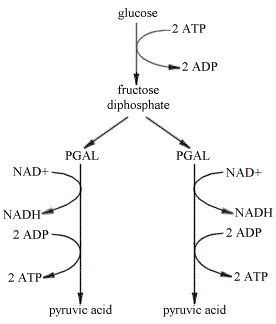
Glycolysis may be subdivided into 3 major phases:
- Phosphorylation of glucose to fructose 1,6 diphosphate. This is activation of glucose and 2 ATPs are used.
- Splitting of this compound into two 3-carbon sugar phosphates, which are interconvertible.
- Oxidation by dehydrogenation. Each 3-C sugar phosphate is oxidized by removal of hydrogen, making a reduced NAD that is NADH and production of 2 ATPs.
Fermentation
Further oxidation of Pyruvic acid requires O2. It then enters mitochondria for aerobic respiration.
Under anaerobic conditions (or insufficient supply of O2) microbes, plants and animals carry out fermentation.
Fermentation involves reduction of pyruvic acid to ethyl alcohol and CO2 (as in yeast) or to lactic acid (as in muscle cells of animals) and oxidation of NADH to NAD+. Thus, NAD is regenerated which can be used in glycolytic pathway and production of 2 ATPs can continue under anaerobic conditions. There is no further release of ATP during fermentation.
Pyruvic Acid in Aerobic Respiration
In the presence of oxygen, pyruvic acid enters the mitochondria and is decarboxylated (removal of CO2) and dehydrogenated (removal of H) to acetyl CoA. Acetyl CoA is thus the connecting link between glycolysis and the next series of reactions that yield more energy in the form of ATP. Acetyl CoA can also be generated from fats and proteins.
