Earth's Movement
-
The Earth’s rotation on its axis causes day and night.
-
The Earth’s revolution (in its orbit around the Sun) causes change in seasons.
-
When nights and days are equal is known as ‘Equinoxes.’ During the equinox’s time, the Sun shines exactly over the equator.
-
March 21 (of every year) is known as the vernal (spring) equinox and September 23 (of every year) is known as the autumnal equinox.

-
When the difference between the length of day and night is maximum is known as ‘Solstice.’
-
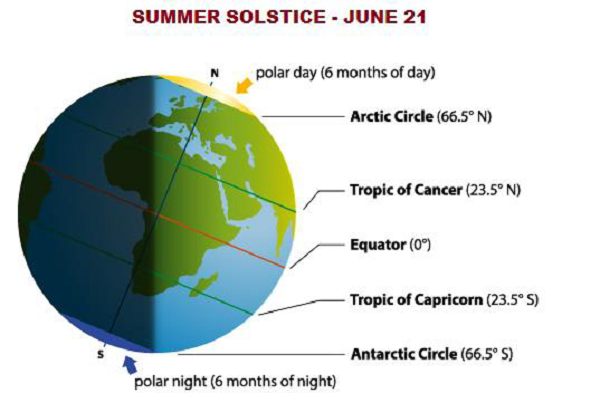
During the solstice time, the Sun shines over the tropics (either on Tropic of Cancer or Tropic Capricorn).
-
23.500 North represents ‘Tropic of Cancer.’ On June 21, the Sun shines over the Tropic of Cancer and it is known as the longest day of the year.
-
June 21 is known as the Summer Solstice.
-
23.500 South represents ‘Tropic of Capricorn.’ On December 21, the Sun shines over the Tropic of Capricorn and it is known as the longest night of the year.
-
December 21 is known as Winter Solstice.

-
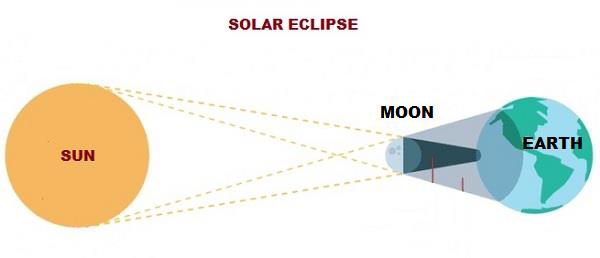
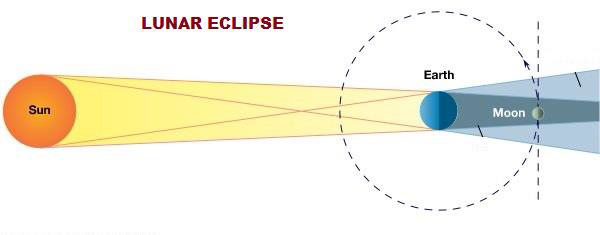
When light of a celestial body is obscured by another celestial body, the situation is known as ‘Eclipse.’
-
When the Earth comes between the Sun and the Moon, it is known as “Lunar Eclipse.”
-
When the Moon come between the Sun and the Earth, it is known as “Solar Eclipse.”