Anaesthetics
Anaesthetics are substances, which cause loss of sensation over a small area (local) or loss of sensation of the whole body. There are two types of anaesthetics - local and general.
Local Anaesthetics
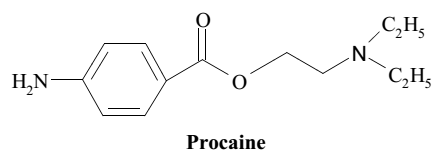
Local anaesthetics produce numbness or loss of sensation of pain, over a small area. Cocaine, procaine and xylocaine are used as local anaesthetic. These are useful for minor operations.
General Anaesthetics
General anaesthetics cause unconsciousness and hence loss sensation of pain in the whole body.
General anaesthetics are used for carrying out major surgical operations. Some of the general anaesthetics are gases like nitrous oxide (also known as laughing gas). Some are low boiling ethers like diethyl ether, divinyl ether, etc. These are given to the patient by inhalation.
On inhaling, these are absorbed through the lungs and make the person unconscious. Anaesthetics have made surgical operations less risky and less painful.
Some anaesthetics are given orally (by mouth), or by injections. Morphine and pathedine (these are the alkaloids obtained from opium) are given as injections or through oral route.