Mirza Ghalib (Asadullah Khan)
Mirza Asadullah Khan surnamed Ghalib was a born poet who not only wrote thoughtful poetry but also thought poetically. Known for its exceptional tenderness and sensibility, Ghalib rose above the poets of his age and thought ahead of his times. Ghalib believed that the ideals of culture did not lie in the isolation of freedom, but on the inter-dependence of individuals and societies in all spheres of thought and action.
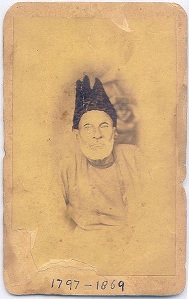
He stood for a learning society where the mind is free and the head is held high. His poetry reflects a deep philosophy based on beauty and truth and has been universally accepted as great poetry.
Born on December 27, 1797 at Agra in a well-to-do family of army officers, his father Mirza Abdullah died fighting when Asad was hardly five. Thus, he was entrusted to the care of his uncle Mirza Nasrulla Beg, a Risaldar in the British army who too died when Asad was nine. Then he was brought up in his maternal grand uncle’s spacious house, his childhood spent in the company of female cousins, kite-flying, swimming across the Yamuna doing all kinds of pranks. Agra left an indelible mark on the young mind of the boy. Although he never went back, the nostalgia of his Agra days gripped him forever.
Ghalib considered poetry as an accomplishment necessary for the nobility of which he was always proud. He wrote his first Urdu Ghazal at 9 and his first Persian ‘Masnavi’, at 11. Among his early influences were Shaikh Muuzzam, an eminent teacher of Agra in those days, a Persian scholar named Hurmuz who named himself as Abdul Samad on conversion from Parsi religion to Islam.
He first visited Delhi at the age of 7 but after his marriage at 13 with Umroa Begum, daughter of Mirza Ilahi Baksh Khan ‘Maruf’, he settled in Delhi where he remained till he died on 15 February, 1869, at 71. In Delhi, he changed many residences till he came to his Ballimaran house in Galli Qasim Jan, recently renovated and included in the heritage list. It is here he composed his immortal verses, it’s here he had love escapades, he drank to his fill, gambled, went to jail. He was a suspect in 1857 revolt, his pension was stopped, his end was pathetic. The poet who had defied all Gods in his youth and challenged the angels, realized in old age, that Ghazal was a narrow genre for him, he wanted wider vistas to express himself.
In his youth, Ghalib was a very handsome man. ‘When I met him for the first time’, wrote Altaf Hussain Haali, his best biographer in ‘Yaadgar-e-Ghalib’, ‘One could easily see what a handsome man he must have been; tall, broadly built, powerful limbs, of charming disposition and ready wit, he appeared even then a fresher from Turan’. A pagan to the core, he stood for the life of pleasure.
Commenting on the poet’s hedonistic nature, Prof. Muhammad Sadiq, in his ‘History of Urdu Literture’ says: ‘Ghalib had no conscious theory of life to offer, he was more intent on living his life than theorizing about it; but there is one thing more than another that his life and poetry substantiate, and to which ample testimony is borne by those who knew him personally, it is that he yearned to have more and more of it and explore its possibilities for personal enjoyment. His attitude about the hereafter, as is well known, was skeptical, and even if, occasionally he was led to think of rewards promised to the righteous, a class to which he emphatically did not belong, he decided to have the cash and let the credit go’.
Jismein lakhon baras ki hoorain hon, Aiyasi jannat ko kaya kare koyi
Meaning: What will one do with a paradise where there are million-year old Hoories (beautiful maids)
At an other place he declares: ‘I have inherited the nature of Adam and I am his descendant. I openly declare that I indulge in sin. I am not a theologian, I am a poet. I am Persian by nature, although my religion is that of Arabs’.
He considered his Persian poetry far superior to that of Urdu verse. Even in volume it is less than one-third of his total output. ‘My Persian poetry is full of colours, my Urdu verse is colourless’. But little did he know that in India he would be remembered by posterity and would achieve immortality through his Urdu writings and not his Persian poetry on which he prided himself.
Although some experts consider his Persian poems also of a high order and can be compared with the best of Persia’s own poets, but the fact remains that he is not recognized in Persia, nor is very much known there. His Urdu poems total no more than 1,800 lines and there also some of them that are laced with Persian idiom and metaphor, but whatever remains needs to be weighed in gold. He raised the status of the ‘Ghazal’ to the dizziest heights. ‘I wash my words with milk’, he often said.
Ganjina-emaani Ka Tallism usko Samajhiye, Jo Lafs Key Ghalib tere Ashar mein Avey
Meaning: Every word I use in my couplets creates a magic, I weave them in my thought process and charge them with the magic of meaning
Ghalib’s poetry is not mere magic of words or a sheer picture gallery of diction, behind every word there is a magic of thought, every word is raised to the status of a concept. Ghalib was an original mind, a keen intellect, a deep thinker. More often than not, his poetry acquired the status of philosophy, a new humanism.
Bus key dushwar hai har kaam ka aasan hone, Admi ko bhi muyassar nahi insane hona
Meaning: It’s not easy for every task to be easy as it’s difficult for man to be human
Pir-I-Kharif
In one of his letters dated 1867, he opens up: ‘I am about to die now. I eat hardly anything at present. All kinds of diseases have overtaken me. From God we come and to God we return. I am Pir-I-Kharif, an old man, decrepit par excellence. My memory has failed me. It seems I never had any memory. For long, I have been hard of hearing. Those who come to see me, write down what they have to say. My food amounts to nothing, a piece of sugar candy peeled, powdered almonds in syrup in the morning, four dried kababs early in the evening. Wine, 5 tolas in weight mixed with equal quantity of rose water before going to bed, is my diet. I am decrepit, defeated, physically imbecile, sinner and a lechar’.
Only a few years before he wrote to Mir Mehdi Majruh : ‘I read throught the day and drink throughout the night’.
According to Prof. Mujeeb, ‘The poetic tradition which Ghalib represents was more than literature, more than culture. It expressed vigorously and coherently, the response of human nature to the problem of human existence. It was a fusion of elements that were philosophical, mystical and aesthetic, also elements that were essentially trivial and euphemeral. The fusion took place in man, and could not take place outside him, in a system of philosophy, mysticism and aesthetics, certainly not in religious dogma’. Ghalib as man, therefore, could not have been superior to Ghalib as poet. As a man, he was a man of the world wanting to live in sumptuous ease. As a poet, he transcends the boundaries of time and space.
He died on 15th February 1869 in the same house at Ballimaran. He lies buried in Nizamuddin near the tomb of Hazrat Nizamuddin Auliya. A large number of mourners joined the funeral procession, both Hindus and Muslims, and among Muslims both Sunnis and Shias. For about a year, articles on Ghalib appeared in Urdu papers every day, every week, every month special supplements were carried out by Delhi papers.